


Yo, folks! Today, I wanna dig deep into the nitty - gritty of what makes 2,6 - Dimethyl - Beta - Cyclodextrin such a rockstar in protein purification. As a supplier of this amazing compound, I've seen firsthand how it can revolutionize the protein purification process.
What's 2,6 - Dimethyl - Beta - Cyclodextrin?
First things first, let's get to know 2,6 - Dimethyl - Beta - Cyclodextrin. It's a modified version of beta - cyclodextrin, which is a cyclic oligosaccharide made up of seven glucose units. The modification here involves adding methyl groups at the 2 and 6 positions of the glucose units. This little tweak changes a lot about its properties. You can learn more about it 2,6 - Dimethyl - Beta - Cyclodextrin.
The Basics of Protein Purification
Before we jump into how 2,6 - Dimethyl - Beta - Cyclodextrin works in protein purification, let's quickly go over what protein purification is all about. Proteins are the workhorses of our cells, and in research, medicine, and industry, we often need to isolate and purify specific proteins. Protein purification aims to separate a particular protein from other biomolecules in a sample, like other proteins, nucleic acids, and small molecules.
There are several methods for protein purification, including chromatography, ultrafiltration, and precipitation. But the choice of method depends on the properties of the protein and the sample. That's where 2,6 - Dimethyl - Beta - Cyclodextrin comes in handy.
The Mechanism of 2,6 - Dimethyl - Beta - Cyclodextrin in Protein Purification
Inclusion Complex Formation
One of the key mechanisms of 2,6 - Dimethyl - Beta - Cyclodextrin in protein purification is its ability to form inclusion complexes. The cyclodextrin molecule has a hydrophobic cavity in the middle and a hydrophilic outer surface. This unique structure allows it to trap hydrophobic molecules inside the cavity.
In protein purification, there are often hydrophobic contaminants or small hydrophobic molecules associated with the protein of interest. 2,6 - Dimethyl - Beta - Cyclodextrin can form inclusion complexes with these hydrophobic species. When it does, it effectively sequesters them away from the protein, making it easier to separate the pure protein from the contaminants.
For example, if there are small hydrophobic ligands bound to the protein, the cyclodextrin can bind to these ligands and release them from the protein. This is especially useful in cases where the presence of these ligands might interfere with the downstream applications of the purified protein.
Solubility Enhancement
Another important aspect is solubility enhancement. Some proteins have poor solubility in aqueous solutions, which can make purification difficult. 2,6 - Dimethyl - Beta - Cyclodextrin can interact with these proteins and improve their solubility.

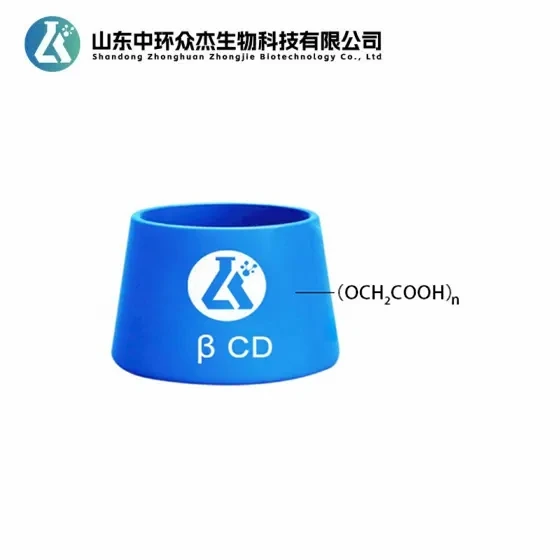
The hydrophilic outer surface of the cyclodextrin can interact with the water molecules, while the hydrophobic cavity can interact with the hydrophobic regions of the protein. This interaction helps to keep the protein in solution and prevents it from aggregating or precipitating. As a result, the protein remains in a soluble state throughout the purification process, making it easier to handle and purify.
Selective Binding
2,6 - Dimethyl - Beta - Cyclodextrin can also exhibit selective binding to certain proteins. Different proteins have different surface properties, and the cyclodextrin can interact more favorably with some proteins than others. This selectivity can be used to separate proteins in a mixture.
For instance, if you have a mixture of two proteins, one with a more hydrophobic surface and one with a more hydrophilic surface, the cyclodextrin might bind preferentially to the more hydrophobic protein. By adjusting the conditions, you can then separate the bound and unbound proteins, effectively purifying the protein of interest.
Interaction with Membrane Proteins
Membrane proteins are notoriously difficult to purify because they are embedded in the lipid membranes. 2,6 - Dimethyl - Beta - Cyclodextrin can play a role here as well. It can interact with the lipid molecules in the membrane and disrupt the membrane structure to some extent.
This disruption can help to release the membrane proteins from the membrane in a more native - like state. Additionally, the cyclodextrin can protect the membrane proteins from denaturation and aggregation during the purification process. It can form a kind of protective layer around the protein, preventing it from interacting with other proteins or surfaces in an unwanted way.
Comparing with Other Cyclodextrins
There are other cyclodextrins out there, like Carboxymethyl Beta - Cyclodextrin. While they all have some common features, 2,6 - Dimethyl - Beta - Cyclodextrin has some advantages.
Carboxymethyl Beta - Cyclodextrin has a negatively charged carboxymethyl group, which gives it different solubility and binding properties compared to 2,6 - Dimethyl - Beta - Cyclodextrin. The methyl groups in 2,6 - Dimethyl - Beta - Cyclodextrin make it more hydrophobic in the cavity, which can be beneficial for binding hydrophobic molecules. In protein purification, this increased hydrophobicity can lead to stronger binding to hydrophobic contaminants and better separation of the protein.
Applications in Different Industries
The use of 2,6 - Dimethyl - Beta - Cyclodextrin in protein purification has far - reaching applications in various industries.
Biotechnology
In biotechnology, purified proteins are used for a wide range of applications, from drug development to enzyme production. 2,6 - Dimethyl - Beta - Cyclodextrin can help to produce high - quality, pure proteins that are suitable for these applications. For example, in the production of monoclonal antibodies, which are used as drugs, the purification process is crucial. The cyclodextrin can improve the purity and yield of the antibodies, making the production process more efficient.
Food Industry
In the food industry, proteins are used as ingredients in various products. Purified proteins can enhance the nutritional value and functionality of food products. 2,6 - Dimethyl - Beta - Cyclodextrin can be used to purify proteins from natural sources, such as milk or soybeans. This can result in protein ingredients with better quality and fewer impurities.
Pharmaceutical Industry
The pharmaceutical industry relies heavily on purified proteins for the development of new drugs. Proteins can be used as therapeutic agents themselves or as targets for drug discovery. 2,6 - Dimethyl - Beta - Cyclodextrin can play a key role in the purification of these proteins, ensuring that they are safe and effective for use in drugs. For example, it can be used to purify recombinant proteins that are used in gene therapy.
Conclusion
So, there you have it! The mechanism of 2,6 - Dimethyl - Beta - Cyclodextrin in protein purification is a combination of inclusion complex formation, solubility enhancement, selective binding, and interaction with membrane proteins. It's a versatile compound that can make the protein purification process more efficient and effective.
If you're in the business of protein purification and are looking for a reliable solution, 2,6 - Dimethyl - Beta - Cyclodextrin is definitely worth considering. We're here as your supplier, ready to provide you with high - quality 2,6 - Dimethyl - Beta - Cyclodextrin for your protein purification needs. If you're interested in learning more or starting a procurement discussion, don't hesitate to reach out. We're eager to work with you and help you achieve the best results in your protein purification processes.
References
- "Cyclodextrins and Their Complexes: Chemistry, Analytical Methods, Applications" by Frédéric Diedonne, et al.
- "Protein Purification: Principles, High - Resolution Methods, and Applications" by Jan - Christer Janson and Lars Ryden.


