


Hey there! As a supplier of Methyl - Beta - Cyclodextrin, I've been getting a lot of questions about how it interacts with pulp fibers. So, I thought I'd dive into this topic and share some insights.
First off, let's talk a bit about what Methyl - Beta - Cyclodextrin is. It's a modified form of beta - cyclodextrin where some of the hydroxyl groups are replaced with methyl groups. This modification gives it unique properties that make it useful in various applications, including its interaction with pulp fibers.
Pulp fibers are the building blocks of paper and other cellulose - based products. They're made up of long chains of cellulose molecules, which are basically polymers of glucose. These fibers have a lot of hydroxyl groups on their surface, which makes them hydrophilic (water - loving).
So, how does Methyl - Beta - Cyclodextrin interact with these pulp fibers? Well, one of the main ways is through inclusion complex formation. Methyl - Beta - Cyclodextrin has a toroidal (doughnut - shaped) structure with a hydrophobic cavity in the middle. This cavity can encapsulate small hydrophobic molecules.
When it comes to pulp fibers, there are often some hydrophobic substances present, like resins and waxes. Methyl - Beta - Cyclodextrin can form inclusion complexes with these hydrophobic substances, effectively removing them from the surface of the pulp fibers. This can improve the quality of the pulp and the final paper product.
For example, in the papermaking process, the presence of resins and waxes can cause problems like stickiness and uneven surface. By using Methyl - Beta - Cyclodextrin, we can reduce these issues. The inclusion complexes formed between Methyl - Beta - Cyclodextrin and the hydrophobic substances are more water - soluble than the original substances. This means they can be easily washed away during the papermaking process.
Another way Methyl - Beta - Cyclodextrin interacts with pulp fibers is through hydrogen bonding. The hydroxyl groups on the surface of the pulp fibers can form hydrogen bonds with the hydroxyl groups on Methyl - Beta - Cyclodextrin. This can help to improve the strength and flexibility of the pulp fibers. When the fibers are bonded together more effectively, the resulting paper product is stronger and more durable.
Now, let's compare Methyl - Beta - Cyclodextrin with some other types of cyclodextrins. For instance, 2,6-Dimethyl-Beta-Cyclodextrin has a similar structure but with different degrees of substitution. It may have different properties and interactions with pulp fibers.
Hydroxypropyl-Beta-Cyclodextrin Aqueous Solution is another type. It's more hydrophilic than Methyl - Beta - Cyclodextrin due to the presence of hydroxypropyl groups. This can affect its interaction with pulp fibers. The hydroxypropyl groups can increase the solubility of the cyclodextrin in water, which may change the way it interacts with the hydrophobic substances on the pulp fibers.
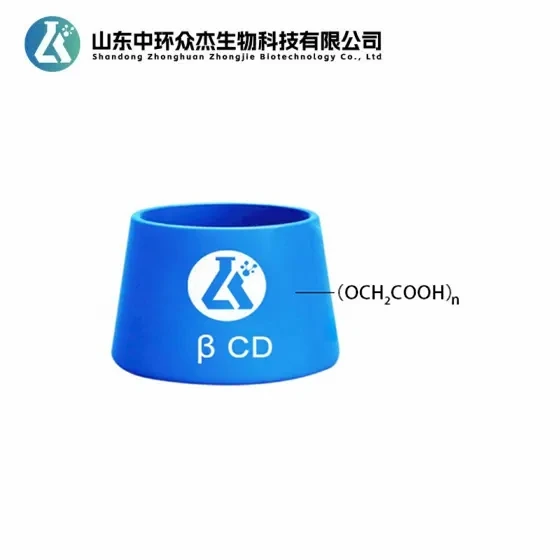
Carboxymethyl Beta-Cyclodextrin has carboxymethyl groups, which give it anionic properties. This can lead to different interactions with pulp fibers, especially in terms of electrostatic forces.
In terms of the practical application of Methyl - Beta - Cyclodextrin in the pulp and paper industry, it can be added at different stages of the papermaking process. For example, it can be added during the pulping process to remove resins and waxes. It can also be added during the papermaking process to improve the strength and quality of the paper.
When adding Methyl - Beta - Cyclodextrin to the pulp, it's important to consider the dosage. Too little may not have a significant effect, while too much can be wasteful and may even cause some negative effects. The optimal dosage depends on various factors, such as the type of pulp, the concentration of hydrophobic substances, and the desired properties of the final paper product.
In addition to its use in the pulp and paper industry, Methyl - Beta - Cyclodextrin has other applications. It can be used in the food industry to encapsulate flavors and nutrients, in the pharmaceutical industry to improve the solubility of drugs, and in the cosmetic industry to enhance the stability of products.
As a supplier of Methyl - Beta - Cyclodextrin, I can offer high - quality products that are suitable for various applications, including those related to pulp fibers. If you're in the pulp and paper industry or any other industry that could benefit from Methyl - Beta - Cyclodextrin, I'd love to have a chat with you. Whether you're looking to improve the quality of your pulp, remove hydrophobic substances, or enhance the properties of your final product, we can work together to find the right solution.
If you're interested in learning more about Methyl - Beta - Cyclodextrin or want to discuss your specific needs, don't hesitate to reach out. We can explore how this amazing compound can be integrated into your processes to achieve better results.

References:
- Some research papers on cyclodextrins and their applications in the pulp and paper industry.
- Textbooks on papermaking and the properties of cellulose fibers.


