


As a supplier of Carboxymethyl Beta - Cyclodextrin, I am often asked about its potential applications. One question that frequently arises is whether Carboxymethyl Beta - Cyclodextrin can be used as a polymer additive. In this blog post, I will explore this topic in detail, examining the properties of Carboxymethyl Beta - Cyclodextrin, the requirements for polymer additives, and the scientific evidence supporting its use in polymer systems.
Properties of Carboxymethyl Beta - Cyclodextrin
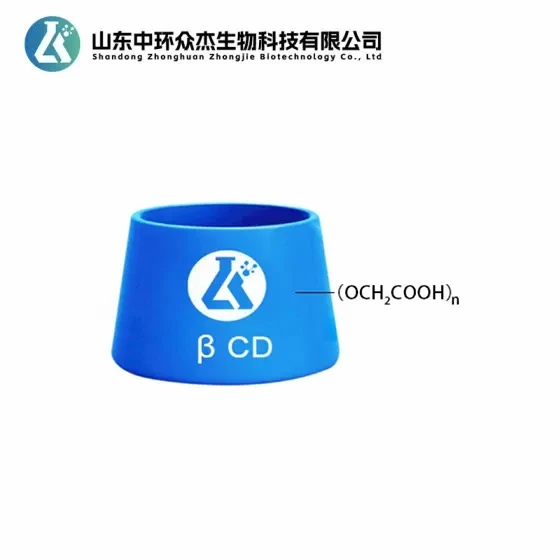
Carboxymethyl Beta - Cyclodextrin (CM - β - CD) is a chemically modified derivative of beta - cyclodextrin. Beta - cyclodextrin is a cyclic oligosaccharide composed of seven glucose units linked by α - 1,4 - glycosidic bonds, forming a truncated cone - shaped structure with a hydrophobic cavity and a hydrophilic exterior. The carboxymethylation of beta - cyclodextrin involves the introduction of carboxymethyl groups (-CH₂COOH) onto the hydroxyl groups of the glucose units.
This modification imparts several important properties to CM - β - CD. Firstly, it enhances the solubility of beta - cyclodextrin in water. The carboxymethyl groups increase the hydrophilicity of the molecule, allowing it to dissolve more readily in aqueous solutions. This improved solubility is beneficial in many applications where water - based systems are used.
Secondly, CM - β - CD has a higher negative charge density compared to unmodified beta - cyclodextrin. The carboxymethyl groups are ionizable, and at appropriate pH values, they can carry a negative charge. This charge property makes CM - β - CD useful in applications such as ion - exchange chromatography and electrostatic interactions with other charged molecules.
Thirdly, the cavity of CM - β - CD retains its ability to form inclusion complexes with a variety of guest molecules. The hydrophobic cavity can encapsulate non - polar or hydrophobic substances, shielding them from the surrounding environment. This property has been exploited in the pharmaceutical industry, for example, to improve the solubility and stability of poorly soluble drugs like Piroxicam Beta - Cyclodextrin Inclusion Complex.
Requirements for Polymer Additives
Polymer additives are substances added to polymers to improve their performance, processing characteristics, or functionality. The requirements for a polymer additive can vary depending on the specific application of the polymer. However, some general requirements include:
- Compatibility: The additive should be compatible with the polymer matrix. This means that it should be able to disperse uniformly within the polymer without causing phase separation or other forms of incompatibility. Incompatible additives can lead to poor mechanical properties, reduced transparency, and other performance issues in the polymer.
- Stability: The additive should be stable under the processing and service conditions of the polymer. It should not decompose, volatilize, or react with the polymer or other additives during processing (such as extrusion, injection molding, or curing) or during the lifetime of the polymer product.
- Functionality: The additive should provide the desired functionality to the polymer. This could include improving mechanical properties (such as strength, toughness, or flexibility), enhancing thermal stability, providing flame retardancy, or improving the barrier properties of the polymer.
- Safety: The additive should be safe for use in the intended application. This includes considerations such as low toxicity, non - mutagenicity, and compliance with relevant regulatory standards.
Evidence for Using Carboxymethyl Beta - Cyclodextrin as a Polymer Additive
Compatibility
CM - β - CD has shown good compatibility with many polymers. Its hydrophilic nature allows it to interact well with polar polymers such as polyvinyl alcohol (PVA), cellulose derivatives, and some polyesters. In these systems, CM - β - CD can be incorporated into the polymer matrix through physical blending or chemical bonding. For example, in PVA - based films, CM - β - CD can be uniformly dispersed, improving the film's mechanical properties and water - vapor barrier properties.
Stability
CM - β - CD is relatively stable under normal polymer processing conditions. It has a high thermal stability, with a decomposition temperature well above the typical processing temperatures of many polymers. This means that it can withstand the heat and shear forces encountered during extrusion, injection molding, and other processing methods without significant degradation.
Functionality
- Improving mechanical properties: CM - β - CD can act as a reinforcing agent in some polymer systems. The inclusion complexes formed by CM - β - CD can interact with the polymer chains, enhancing the intermolecular forces within the polymer matrix. This can lead to an increase in the tensile strength and modulus of the polymer. For example, in some biopolymer composites, the addition of CM - β - CD has been shown to improve the mechanical performance of the materials.
- Enhancing barrier properties: The ability of CM - β - CD to form inclusion complexes can be used to improve the barrier properties of polymers. By encapsulating volatile or reactive molecules within its cavity, CM - β - CD can prevent their diffusion through the polymer matrix. This is particularly useful in packaging applications, where polymers are used to protect products from oxygen, moisture, and other environmental factors.
- Providing controlled release: In some cases, polymers containing CM - β - CD can be used for controlled - release applications. The guest molecules encapsulated in the CM - β - CD cavities can be released gradually from the polymer matrix over time. This property has potential applications in drug delivery systems, where the polymer can act as a carrier for drugs, releasing them in a controlled manner at the target site.
Safety
CM - β - CD is generally considered to be safe for use in many applications. It has low toxicity and is biodegradable, which makes it an attractive option for environmentally friendly polymer additives. It also complies with many regulatory standards for food and pharmaceutical applications, which further supports its use in polymer systems that come into contact with these products.
Applications of Carboxymethyl Beta - Cyclodextrin in Polymers
Packaging Industry
In the packaging industry, polymers with CM - β - CD additives can be used to produce high - performance packaging materials. For example, 2,6 - Dimethyl - Beta - Cyclodextrin and CM - β - CD can be incorporated into polyolefin - based films to improve their oxygen and moisture barrier properties. This can extend the shelf life of food products and other perishable goods.
Biomedical Applications
In biomedical applications, polymers containing CM - β - CD can be used for tissue engineering, drug delivery, and wound healing. The controlled - release properties of CM - β - CD in polymer matrices can be exploited to deliver drugs to specific tissues or cells in a targeted manner. Additionally, the biocompatibility of CM - β - CD makes it suitable for use in contact with biological tissues.
Environmental Applications
In environmental applications, polymers with CM - β - CD additives can be used for the removal of pollutants from water and air. The inclusion complexes formed by CM - β - CD can adsorb pollutants such as heavy metals, organic solvents, and pesticides. The polymer matrix can then be easily separated from the contaminated medium, providing an effective method for environmental remediation.
Conclusion
Based on the properties of Carboxymethyl Beta - Cyclodextrin and the scientific evidence supporting its use in polymer systems, it is clear that CM - β - CD can be used as a polymer additive. Its compatibility, stability, functionality, and safety make it a promising candidate for a wide range of polymer applications. Whether you are in the packaging, biomedical, or environmental industry, CM - β - CD can offer unique benefits to your polymer products.
If you are interested in exploring the use of Carboxymethyl Beta - Cyclodextrin in your polymer applications, I encourage you to contact us for further discussion and potential procurement. Our team of experts can provide you with detailed information about our Carboxymethyl Beta - Cyclodextrin products and help you determine the best approach for your specific needs.

References
- Szejtli, J. (1988). Cyclodextrin technology. Kluwer Academic Publishers.
- Loftsson, T., & Duchêne, D. (2007). Cyclodextrins in pharmacy. International Journal of Pharmaceutics, 329(1 - 2), 1 - 11.
- Szente, L., & Szejtli, J. (2004). Therapeutic applications of cyclodextrins. Journal of Pharmacy and Pharmacology, 56(11), 1131 - 1149.
- Liu, X., & Li, Y. (2015). Applications of cyclodextrins in polymers. Progress in Polymer Science, 45, 1 - 23.


