


As a supplier of Betadex Sulfobutyl Ether Sodium, I've witnessed a growing interest in its unique properties, especially in its ability to form inclusion complexes with different types of molecules. In this blog, we'll delve into the science behind these inclusion complexes, exploring the diverse molecules that can interact with Betadex Sulfobutyl Ether Sodium and the implications of these interactions.
Understanding Betadex Sulfobutyl Ether Sodium
Betadex Sulfobutyl Ether Sodium, a derivative of beta - cyclodextrin, is a highly water - soluble, non - toxic, and biocompatible compound. Its structure consists of a toroidal shape with a hydrophobic inner cavity and a hydrophilic outer surface. This structure is the key to its ability to form inclusion complexes. The hydrophobic cavity can encapsulate non - polar molecules, while the hydrophilic exterior allows the complex to dissolve in aqueous solutions.
Types of Molecules that can form Inclusion Complexes
1. Hydrophobic Drugs
Many drugs are hydrophobic, which means they have poor solubility in water. This poor solubility can lead to low bioavailability, making it difficult for the body to absorb the drug effectively. Betadex Sulfobutyl Ether Sodium can form inclusion complexes with these hydrophobic drugs, improving their solubility and stability. For example, drugs like paclitaxel, a well - known anti - cancer drug, have low water solubility. When paclitaxel forms an inclusion complex with Betadex Sulfobutyl Ether Sodium, its solubility in water increases significantly. This not only enhances the drug's bioavailability but also reduces the need for toxic solvents that are often used to solubilize hydrophobic drugs.
2. Essential Oils
Essential oils are widely used in the fragrance, food, and cosmetic industries. However, they are volatile and can be easily oxidized. Betadex Sulfobutyl Ether Sodium can form inclusion complexes with essential oils, protecting them from oxidation and volatilization. For instance, lavender essential oil, which is known for its calming properties, can be encapsulated in Betadex Sulfobutyl Ether Sodium. This not only extends the shelf - life of the essential oil but also allows for controlled release, which is beneficial in applications such as aromatherapy.
3. Flavors
In the food industry, flavors are often volatile and can lose their intensity over time. By forming inclusion complexes with Betadex Sulfobutyl Ether Sodium, flavors can be protected and their release can be controlled. For example, fruit flavors like strawberry or lemon can be stabilized in this way. This is particularly useful in products like chewing gums or candies, where a long - lasting flavor is desired.
The Mechanism of Inclusion Complex Formation
The formation of inclusion complexes between Betadex Sulfobutyl Ether Sodium and different molecules is based on non - covalent interactions such as van der Waals forces, hydrogen bonding, and hydrophobic interactions. When a molecule approaches the hydrophobic cavity of Betadex Sulfobutyl Ether Sodium, the hydrophobic parts of the molecule are attracted to the cavity, while the hydrophilic parts remain outside. This process is driven by the reduction of the free energy of the system.

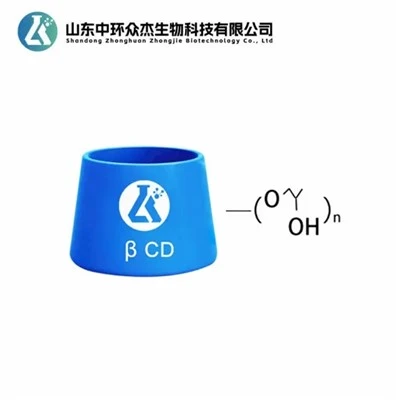
The stability of the inclusion complex depends on several factors, including the size and shape of the guest molecule, the degree of substitution of the sulfobutyl ether groups in Betadex Sulfobutyl Ether Sodium, and the pH and temperature of the solution. For example, a guest molecule that fits well into the cavity of Betadex Sulfobutyl Ether Sodium will form a more stable complex.
Applications of Inclusion Complexes
1. Pharmaceutical Industry
In the pharmaceutical field, inclusion complexes of Betadex Sulfobutyl Ether Sodium with drugs can improve drug delivery. By enhancing the solubility and stability of drugs, these complexes can increase the bioavailability of drugs, reduce side effects, and improve patient compliance. For example, some drugs that are difficult to formulate due to their poor solubility can be successfully formulated as inclusion complexes with Betadex Sulfobutyl Ether Sodium.
2. Food and Beverage Industry
In the food and beverage industry, inclusion complexes can be used to improve the stability and flavor of products. As mentioned earlier, flavors can be protected and their release can be controlled, which is important for the quality and shelf - life of food products.
3. Cosmetic Industry
In cosmetics, inclusion complexes can be used to encapsulate active ingredients such as vitamins and antioxidants. This can protect these ingredients from degradation and improve their penetration into the skin.
Comparison with Other Cyclodextrins
While Betadex Sulfobutyl Ether Sodium has unique properties, it's also interesting to compare it with other cyclodextrins. For example, Hydroxypropyl - Beta - Cyclodextrin (Oral Pharmaceutical Grade) is another commonly used cyclodextrin. It also has good solubility and can form inclusion complexes with various molecules. However, Betadex Sulfobutyl Ether Sodium has a higher solubility and a more negative charge, which can lead to different interactions with guest molecules.
Hydroxypropyl Beta Cyclodextrin for Injection is designed for parenteral use. It has different characteristics compared to Betadex Sulfobutyl Ether Sodium, especially in terms of its safety profile and the types of drugs it can complex with.
Methyl - Beta - Cyclodextrin is also used in various industries. It has a different substitution pattern compared to Betadex Sulfobutyl Ether Sodium, which can affect its ability to form inclusion complexes and its solubility properties.
Conclusion
In conclusion, Betadex Sulfobutyl Ether Sodium can indeed form inclusion complexes with a wide range of molecules, including hydrophobic drugs, essential oils, and flavors. These inclusion complexes have numerous applications in the pharmaceutical, food, and cosmetic industries. The unique structure and properties of Betadex Sulfobutyl Ether Sodium make it a valuable tool for improving the solubility, stability, and bioavailability of various substances.
If you're interested in exploring the potential of Betadex Sulfobutyl Ether Sodium for your specific applications, we'd be more than happy to discuss your needs. Whether you're in the pharmaceutical, food, or cosmetic industry, our team of experts can provide you with detailed information and support. Contact us to start a procurement discussion and discover how Betadex Sulfobutyl Ether Sodium can benefit your products.
References
- Stella, V. J., & He, Q. (2008). Sulfobutylether - β - cyclodextrin: a pharmaceutically acceptable solubilizing agent. Advanced Drug Delivery Reviews, 60(8), 1023 - 1039.
- Loftsson, T., & Brewster, M. E. (1996). Pharmaceutical applications of cyclodextrins. 1. Drug solubilization and stabilization. Journal of Pharmaceutical Sciences, 85(10), 1017 - 1025.
- Szente, L., & Szejtli, J. (2004). Cyclodextrins in pharmacy. Medical Research Reviews, 24(3), 367 - 380.


