


Hey there! As a supplier of Piroxicam Beta - Cyclodextrin Inclusion Complex, I often get asked about its compressibility. So, let's dive right into it and break down what compressibility means in the context of this nifty inclusion complex.
First off, let's understand what Piroxicam Beta - Cyclodextrin Inclusion Complex is. Piroxicam is a non - steroidal anti - inflammatory drug (NSAID) that's used to relieve pain, swelling, and joint stiffness. But it has some drawbacks, like poor solubility in water. That's where beta - cyclodextrin comes in. Beta - cyclodextrin is a cyclic oligosaccharide with a hydrophobic cavity and a hydrophilic outer surface. When Piroxicam forms an inclusion complex with beta - cyclodextrin, it can improve the drug's solubility, stability, and bioavailability.
Now, compressibility. In the pharmaceutical world, compressibility refers to the ability of a powder or granule to be compressed into a tablet or other solid dosage form. It's a crucial property because it affects the quality and performance of the final product. A good compressibility means that the material can be easily compressed into a tablet with the right hardness, friability, and disintegration time.
For Piroxicam Beta - Cyclodextrin Inclusion Complex, compressibility depends on several factors. One of the main factors is the particle size and shape of the complex. Smaller particles generally have better compressibility because they can pack more tightly together. The shape of the particles also matters. Spherical particles tend to flow better and compress more uniformly compared to irregularly shaped particles.
Another factor is the moisture content. A little bit of moisture can act as a lubricant and help the particles slide past each other during compression. But too much moisture can cause the tablets to stick to the punches and dies, or it can lead to chemical degradation of the drug over time. So, it's important to control the moisture content within an optimal range.
The ratio of Piroxicam to beta - cyclodextrin in the inclusion complex also plays a role in compressibility. If the ratio is off, it can affect the physical properties of the complex and make it harder to compress. For example, if there's too much Piroxicam relative to beta - cyclodextrin, the complex might be more difficult to compress into a stable tablet.
Let's talk about how we can measure the compressibility of Piroxicam Beta - Cyclodextrin Inclusion Complex. One common method is the Heckel analysis. This method involves plotting the logarithm of the relative density of the compact against the applied pressure. The slope of the linear part of the Heckel plot gives an indication of the compressibility of the material. A steeper slope means better compressibility.
Another method is the Kawakita analysis. This method is based on the relationship between the applied pressure and the volume reduction of the powder bed. It can provide information about the initial packing behavior and the compressibility of the material.
Now, why is compressibility so important for us as suppliers and for the pharmaceutical industry in general? Well, if the Piroxicam Beta - Cyclodextrin Inclusion Complex has good compressibility, it means that pharmaceutical manufacturers can produce tablets more efficiently. They can use standard tablet - making equipment without having to make a lot of adjustments or use special additives. This can save time and money in the manufacturing process.
On the other hand, if the compressibility is poor, it can lead to a lot of problems. The tablets might be too soft and break easily during handling and packaging. Or they might be too hard, which can affect the disintegration and dissolution of the drug in the body. This can ultimately impact the effectiveness of the medication.
As a supplier, we take compressibility very seriously. We work hard to ensure that our Piroxicam Beta - Cyclodextrin Inclusion Complex has the right physical properties for optimal compressibility. We use advanced manufacturing techniques to control the particle size, shape, and moisture content of the complex. We also conduct rigorous quality control tests to make sure that the compressibility meets the industry standards.
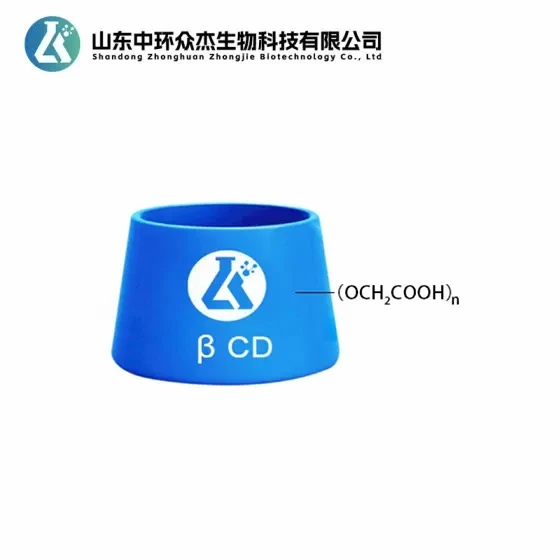
In addition to Piroxicam Beta - Cyclodextrin Inclusion Complex, we also offer other cyclodextrin - based products. For example, we have Carboxymethyl Beta - Cyclodextrin, which has unique properties that make it suitable for a variety of applications in the pharmaceutical, food, and cosmetic industries. We also supply Hydroxypropyl - Gamma - Cyclodextrin (Industrial Grade) and Hydroxypropyl - Beta - Cyclodextrin Aqueous Solution, both of which are widely used in different sectors.

If you're in the pharmaceutical industry or any other industry that could benefit from our cyclodextrin products, I encourage you to get in touch with us. Whether you're looking for Piroxicam Beta - Cyclodextrin Inclusion Complex or any of our other products, we're here to provide you with high - quality materials and excellent customer service. We can work with you to understand your specific needs and develop customized solutions.
In conclusion, the compressibility of Piroxicam Beta - Cyclodextrin Inclusion Complex is a key property that affects its usability in tablet manufacturing. By understanding the factors that influence compressibility and using appropriate measurement methods, we can ensure that our product meets the highest standards. So, if you're interested in learning more or making a purchase, don't hesitate to reach out.
References
- Leuner, C., & Dressman, J. (2000). Improving drug solubility for oral delivery using cyclodextrins. European Journal of Pharmaceutics and Biopharmaceutics, 50(1), 29 - 47.
- Aulton, M. E., & Taylor, P. K. (2013). Aulton's Pharmaceutics: The Design and Manufacture of Medicines. Churchill Livingstone.
- Shah, N. H., & Aulton, M. E. (2008). Compression of powders and granules. In Pharmaceutical Dosage Forms: Tablets (Vol. 1, pp. 113 - 146). Informa Healthcare.


